
雷霆扫毒
More global travelers are going beyond China’s megacities to experience farming, village life and local traditions firsthand_我的网站

一 |
Editor's Note:
In early 2026, the phrase "Very Chinese Time" went viral on global social media platforms. Content centered around China's everyday life has been widely viewed and discussed, bringing the Chinese experience into the international public sphere in an extremely down-to-earth way. However, this phenomenon goes beyond mere online popularity - it is unfolding amid the ongoing reshaping of the global order and the accumulation of anxiety in Western societies. A deeper transformation is emerging, as China's lifestyle, pop culture and technological practices are increasingly recognized, discussed and used as references around the world.
This series uses "Very Chinese Time" as an observation lens to go beyond a single internet trend and systematically showcase how the Chinese experience is entering global everyday life. This is the sixth installment of the series.
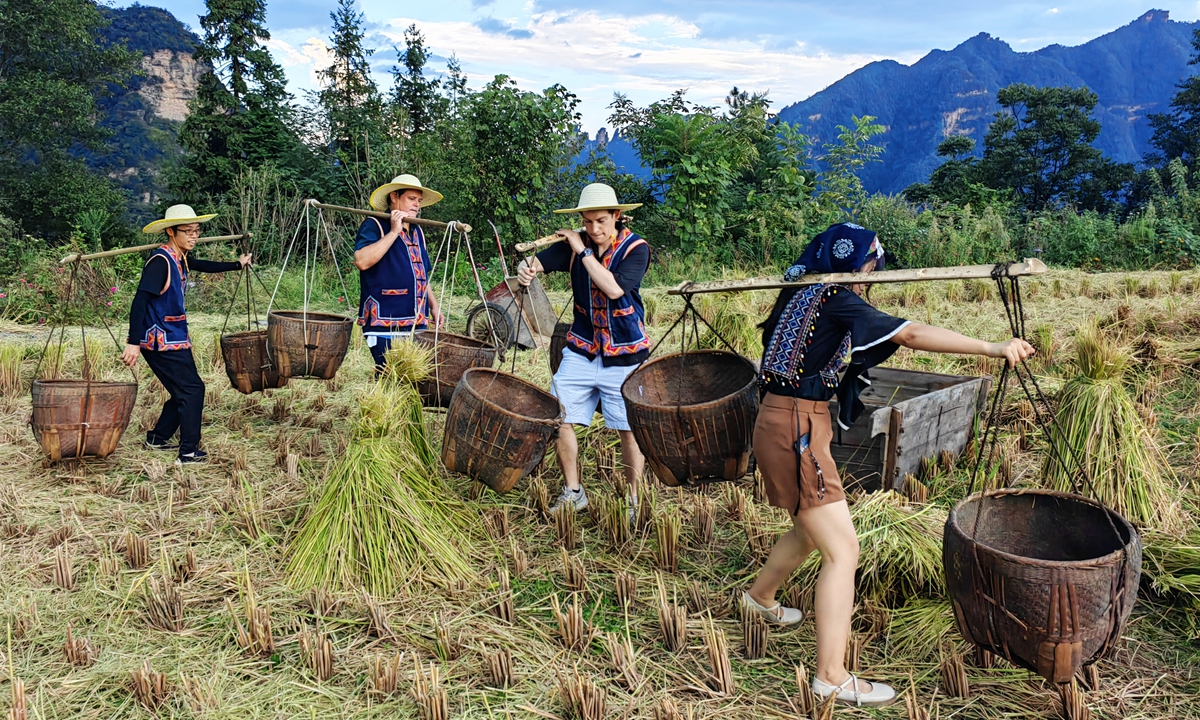
"This is way harder than any weights I lifted in the gym. I never felt so much pain and struggle as when I was carrying those watermelons," Kevin Loi-Heng could not help thinking as he learned to carry two baskets of watermelons on a shoulder pole, just as local farmers do.
The 29-year-old traveler from London had seen China's modern megacities on previous business trips. But two weeks spent working on farms in the countryside of Fenghua, Ningbo, East China's Zhejiang Province, gave him a chance to see a very different side of the country.
China's inbound tourism boom has continued into 2026. Inbound tourism maintained strong growth, while data from the National Immigration Administration showed that 22.91 million foreigners entered China in the first half of the year, up 20.4 percent year-on-year, according to a report about 2026 tourism market insights for the first half of the year released by the China Tourism Association.
As "China Travel" continues to trend across social media, a trip to Beijing, Shanghai, Guangzhou or Shenzhen is no longer the only way foreign visitors explore the country. Increasingly, they are heading into villages, farms and fields.
Videos posted by foreign travelers show visitors picking fruit, harvesting rice, feeding livestock, learning traditional farming techniques and simply spending time with local villagers.
Through these immersive rural experiences, they are discovering a different China, one that is earthy, vibrant and deeply human, a tourism expert told the Global Times.
See a different side
Kevin's own company focuses on research into sustainable agriculture and soil health, so working with the land was not entirely unfamiliar territory. Yet he found that China's countryside taught him a great deal.
"One question I had before coming to China to do farm work was: With 1.4 billion people, how does China feed all of its people?" Kevin told the Global Times. "I had this picture in my head that China was very large, and that remote rural communities would have different ways of living and different land practices. I wasn't sure if they would accept a foreigner like me."
The fact is, this land welcomed everything.
To get to the mountain fields and start working, Kevin and his fellow participants would get up as early as 4 am and begin working by 6 am. They picked local white peaches, harvested watermelons and dug up peanuts.
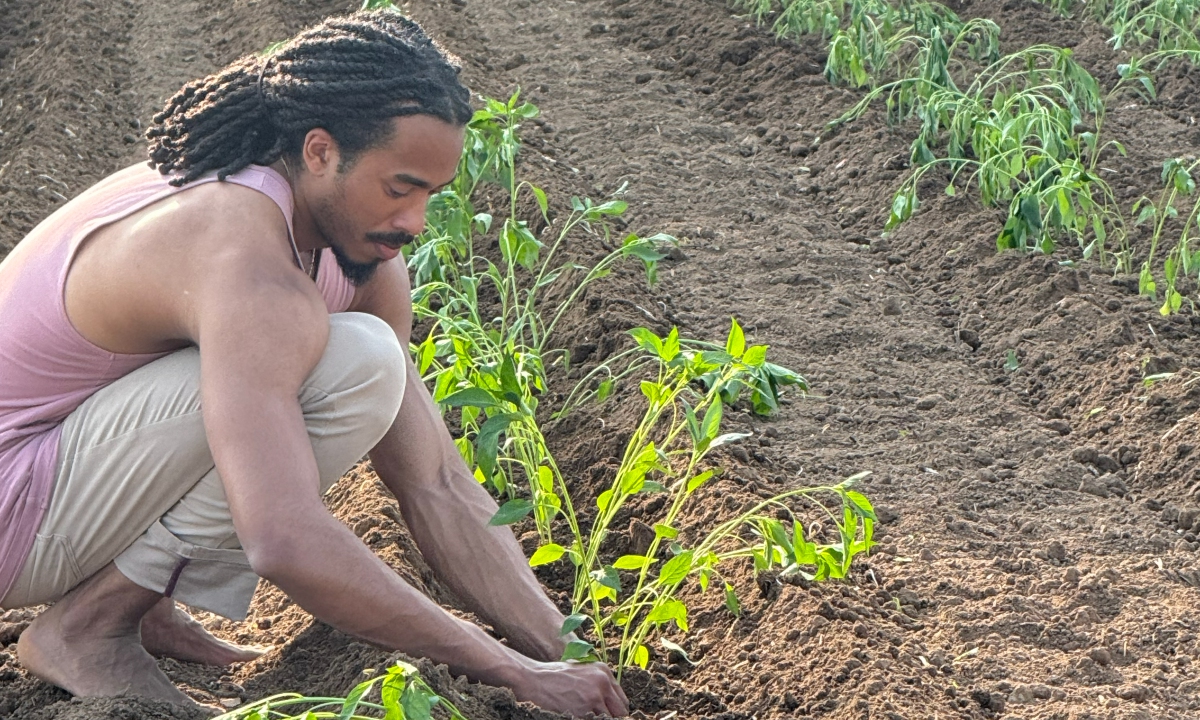
Beyond picking crops, Kevin helped prepare the land and soil, plant seasonal crops such as chilies, prune overgrown trees and clean up farmland. He also fed pigs, chickens, ducks and geese, checked agricultural equipment at the local rural market and spoke with farmers and agricultural workers about the challenges they face in their daily lives.
"One of the first tools I used was a backpack sprayer. It was actually very practical," he recalled.
Kevin said the experience broadened his understanding of China. "I saw that the working people are very humble, but also very hardworking."
Over the past year, China's countryside has emerged as a new growth area for inbound tourism.
According to data released by Trip.com, a large online travel agency, on February 11, its affiliated rural resort farms saw inbound tourism bookings increase by more than 50 percent year-on-year in 2025, while the number of room nights booked by international visitors rose by more than 75 percent. "Visiting the Chinese countryside" is becoming a new option for international travelers who once focused overwhelmingly on major cities. Singapore, the US, Australia, Germany and Malaysia were among the major source markets.
Many overseas vloggers are turning their lenses toward China's countryside, hoping to find a different perspective from which to observe the country.
In March, US content creators Ludwig and Michael were cycling through a village in Central China's Hunan Province, when they encountered villagers preparing for a traditional funeral. Mistaking the gathering for a busy restaurant and the people dressed in white mourning clothes for cooks, they initially misunderstood what was happening. But rather than being offended, a local villager surnamed Li invited the two travelers into his home for a meal. The three chatted about their cycling adventures along the way and eventually sang a song together before parting ways.
After Ludwig uploaded the footage to YouTube, the video received more than 2 million views, offering overseas audiences an unexpected glimpse into culture in a Chinese village.
The appeal of countryside
As overseas audiences increasingly encounter images of China's highly modernized cities across various online platforms, some travelers are showing greater interest in experiences that offer a sense of authenticity, simplicity and contrast, Zhang Lingyun, a professor and the executive editor-in-chief of Tourism Tribune journal, told the Global Times.
After Kevin showed the video on social media, a lot of his friends found it quite unexpected. "They found it interesting and funny. One of my friends remarked, 'You're always doing side quests,' and said he wished he could live an adventurous life like me," Kevin recalled.
The criteria by which travelers evaluate an experience have changed, Zhang emphasized.
Zhao Mai, an English-speaking tour guide who works extensively with international visitors, has observed this shift firsthand.
Zhao told the Global Times that many young foreign travelers are increasingly interested in participating in everyday activities and interacting directly with local people rather than moving from one landmark to another.
There is another attraction: value for money. China's rural tourism destinations can offer international visitors a combination of affordability, quality and variety that is difficult to match, Zhao said. The diversity of China's countryside is also a major advantage.
In 2025, among the hundreds of "best tourism villages" selected by UN Tourism, China alone accounted for 19, spanning a vast geographical range from the eastern coastal regions to the western plateaus, and from the water towns of Jiangnan to the mountain villages of the southwest, according to the CCTV News.
But Zhao believed the most important factor is still the rise of experiential tourism itself.
"Experiential tourism has become one of the key forces driving the global tourism industry," he said. "And that is where China's countryside has a natural advantage. Rural areas in China offer natural scenery, local traditions, community life and opportunities for deeper participation."
Kevin said working in the village in Zhejiang gave him a new perspective on self-sufficiency and sustainable living.
The experience was so meaningful that he returned to China for a second trip, this time spending another two weeks doing agricultural work in Qufu, East China's Shandong Province.
A teacher living in the local Confucius Institute community spoke to him about the "qi" of the soil, an idea that, Kevin noted, is largely unfamiliar in the Western context.
"In the West, I was accustomed to explanations and theories in which soil is seen simply as a resource with physical and chemical properties that can be exploited," he said.
The trip helped him understand soil in a broader way, not merely as an agricultural resource, but as something essential to community life and health and as a connector between humans and the environment, or biosphere.
"I wish I could speak Chinese and understand local people's thoughts better, so I could learn more about Chinese rural agricultural life and local history," he said.
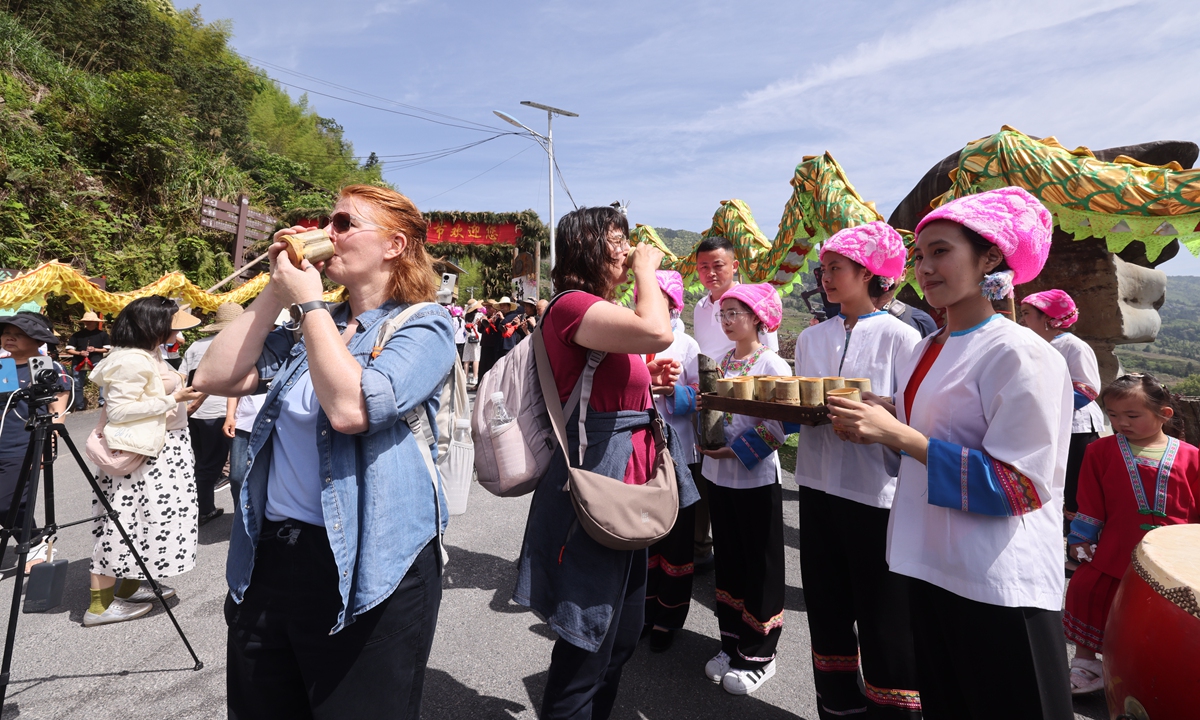
In May 2026, a village in Guilin, South China's Guangxi Zhuang Autonomous Region, held its annual Terraced Fields Plowing Festival. Across the layers of terraced fields, local residents demonstrated traditional farming practices, attracting visitors from both China and abroad, the news outlet chinanews.com reported.
He Chengxi, a deputy manager of the media department of Guilin Longji Tourism Co., Ltd., told the Global Times that foreign visitors are particularly drawn to this immersive experience as they are intrigued by this traditional method of farming, and found Chinese farming culture novel and meaningful.
And social media shows that the phenomenon goes beyond short-term tourism. For example, some foreigners who have married Chinese partners have shared their enjoyment of rural life online.
From tourism traffic to lasting connections
Zhao believes the growing interest in rural tourism should be viewed against the broader backdrop of China's efforts to revitalize the countryside and integrate agriculture, culture and tourism.
China unveiled its "No. 1 central document" for 2026 on February 3, outlining plans to advance agricultural and rural modernization and to promote all-around rural revitalization, according to the Xinhua News Agency.
According to estimates from the data center of the Ministry of Culture and Tourism, China received 793 million rural tourism visits in the first quarter of 2026, up 12.2 percent year-on-year. Rural tourism revenue reached 457 billion yuan ($63.5 billion), up 10.9 percent, Xinhua reported.
The direct economic impact of foreign visitors to rural areas, however, is harder to measure. Zhang said it seems that that rural inbound tourism remains a relatively small trend amplified by social media rather than an established industry at scale.
Zhao believes their most important contribution may therefore be something less immediately measurable: international visibility.
There is also a less visible effect. The arrival of foreign tourists can prompt local residents to reconsider the value of their own everyday lives, Zhao noted.
"Farmers who are accustomed to regarding planting, harvesting and tending livestock as routine work may suddenly find outsiders treating those same activities as something worth traveling thousands of kilometers to experience," he said.
That outside perspective can give ordinary agricultural work, local food and traditional customs a new sense of value, not only as tourism products, but as elements of local identity, Zhang said.
How can this social media traffic be turned into lasting tourism demand? Zhang believed that the key might not be intervening too heavily in the specific products that villages offer, but improving the basic conditions that allow international visitors to access them.
The government's role, the expert suggested, is to help bridge the "last mile," making rural destinations easier and safer to reach and navigate, while leaving room for villages and travelers themselves to determine what kind of experiences are meaningful.
And beyond economics, Zhang said, these encounters carry cultural exchange value.
"People-to-people exchanges can help dispel misunderstandings and allow the world to see another side of China: ordinary Chinese people, like people everywhere, value peace, stability and a prosperous life. That deeper cultural encounter may ultimately be one of the most valuable things international tourism can offer," he explained.
Kevin has not stopped thinking about the people and places he encountered in China's countryside. The experience changed his impression of rural China and made him want to return and stay longer.
"I would like to know more about what other people who have experienced these agricultural activities think," he said. "Is now the time to reconnect with this ancient practice?"
。
Extreme weather is increasingly a global challenge, and the key to addressing climate risks lies in earlier prediction, more precise action and smarter preparedness, with emerging technologies playing a vital role. The Global Times launches the "Climate Gambit" series, exploring how research teams are leveraging cutting-edge technologies, including artificial intelligence, high-performance computing and smart observation systems, to anticipate weather changes, enhance disaster early-warning and strengthen resilience against climate risks.
Inside a state key laboratory at Xi'an University of Technology, Northwest China's Shaanxi Province, there is a miniature but complete "water world" which simulated water channels, inland lakes and main rivers to recreate real flood scenarios and test their newly developed GPU Accelerated Surface Water Flow and Transport Model (GAST).
Known as a "super brain" for flood control, GAST can complete flood simulations involving more than 3 million computational units within 30 seconds, helping transform flood management from a reaction to emergency into active precautions since "flooding impacts can be predicted even before rainfall arrives."
At a time when extreme rainfall and summer flooding have become increasingly frequent, questions such as when the flooding will arrive, which roads may be submerged and when residents should evacuate have become increasingly important.
In an exclusive interview with the Global Times, Hou Jingming, a professor at Xi'an University of Technology and the leader of the research team, explained how the GAST model seeks to answer these questions by accurately predicting flood development and identifying vulnerable areas before disasters occur, and how the model helps authorities take preventive measures to reduce casualties and economic losses.
AI empowering 'flood drill'
The water tank system in the lab was designed to create a controllable, repeatable and observable environment to simulate complex hydrological processes, including river flooding, urban water level changes, lake regulation, drainage pump operations and coordinated flood-control measures.
By adjusting variations such as upstream water inflow, rainfall intensity, downstream water levels and drainage conditions, scientists can recreate different flood scenarios. Meanwhile, water levels, flow speeds and other data are collected in real time and displayed on a digital twin platform.
"If a rainstorm and corresponding floods are an exam, GAST is like a 'drill,'" Hou said. "It can simulate how floods develop, where water will flow, which areas may be inundated and when river levels may rise, ensuring authorities are well but not overly prepared."
To answer the public's concern about "whether my neighborhood will be flooded when heavy rain arrives," the team developed new algorithms for urban surface water flow, including improvements in terrain slope and friction calculations.
These breakthroughs have improved simulation accuracy in complex urban environments. Compared with extensive monitoring data, GAST can keep simulation errors of key hydrodynamic factors within 15 percent. This means the model can provide not only general flood trends, but also quantitative information such as water depth, flow speed and inundation areas.
Combined with AI technologies, it can identify complex relationships between rainfall, water conditions, flood depth, flow velocity and affected areas, cutting simulations from hours in traditional methods to minutes or even seconds.
The faster calculation capability means that once meteorological authorities update forecasts, the model can quickly estimate flood risks in different parts of a city.
"The earlier rainfall warnings are issued, the earlier we can identify potential flooding hotspots and high-risk areas," Hou said. "This saves valuable time for evacuation, traffic management and emergency deployment."
For smarter disaster response
Building an accurate flood prediction model also requires integrating large amounts of urban data other than weather forecasts, including urban terrain, drainage networks and infrastructure information.
For example, a model developed for Xi'an incorporates geographic data and drainage system information collected from relevant authorities and field surveys. After receiving rainfall forecasts, the system can quickly calculate possible flooding scenarios, showing when and where waterlogging may occur and highlighting vulnerable roads and areas through visual maps.
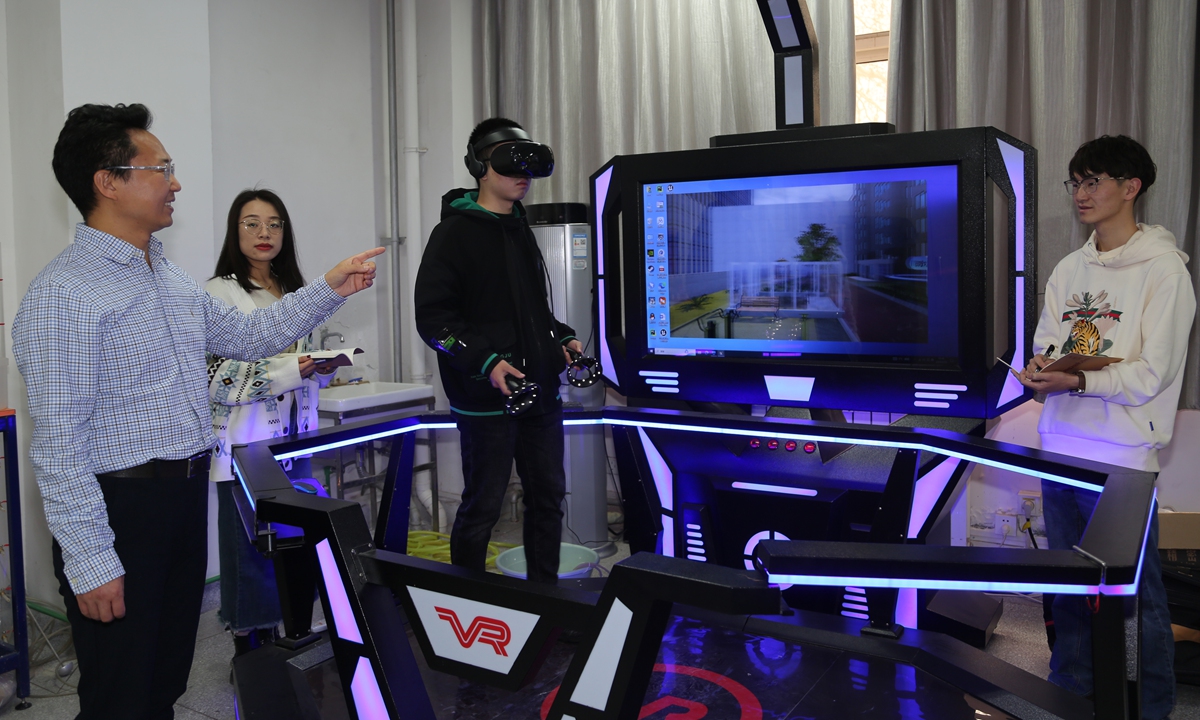
To demonstrate how the super brain works in case of possible flooding, the laboratory has set a virtual reality area where visitors can experience a simulated urban flooding evacuation in the Xiaozhai area of Xi'an. Wearing VR headsets, participants can see water levels gradually rising and follow emergency instructions to move toward higher ground.
The entire technological package has already been applied in real-world flood prevention.
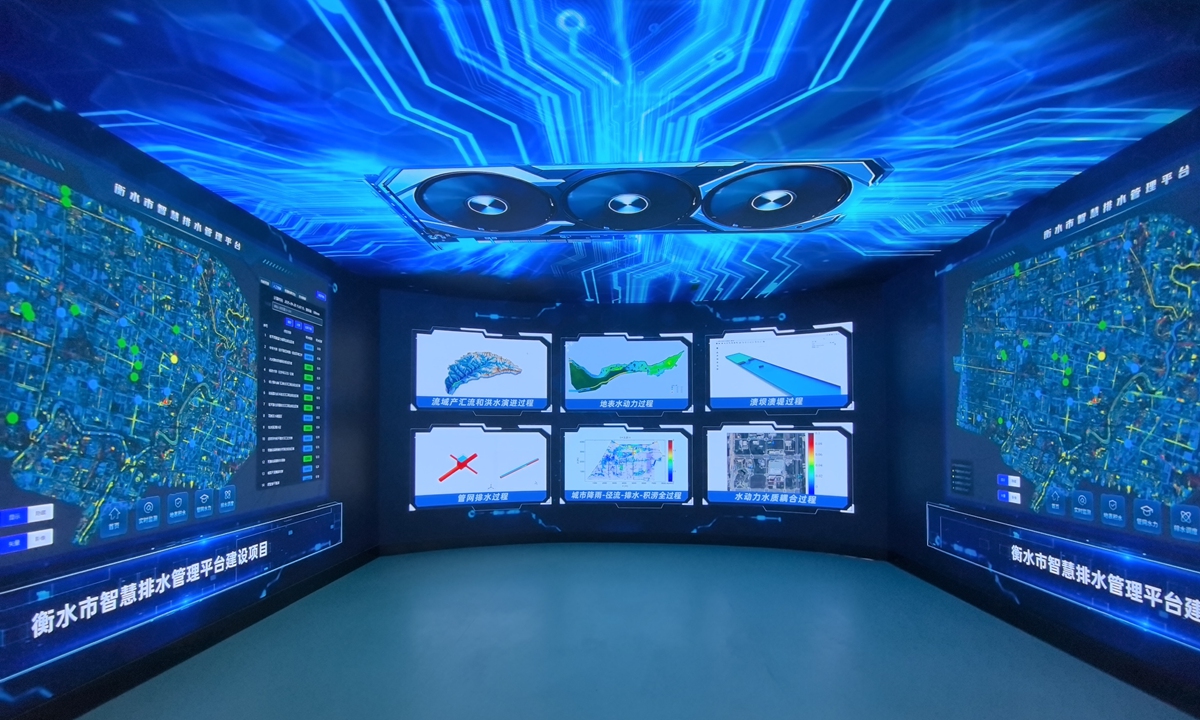
During Typhoon Muifa in 2022, Haishu district in Ningbo, East China's Zhejiang Province, recorded a regional rainfall of 367 millimeters. Using GAST as its core technology, the local flood forecasting platform integrated weather forecasts, AI algorithms and real-time monitoring data to provide rolling three-hour flood risk predictions.
Post-event assessments showed that predicted risks at most locations matched actual flooding conditions. The average relative error between predicted and observed maximum water depths was 13 percent.
The GAST model was also integrated into a smart rain and flood management platform in Qinhan new city area in Xianyang of Shaanxi, and during a rainstorm warning in July 2022, the platform provided continuous monitoring and forecasts. Based on the results, local authorities shifted from routine inspections to targeted monitoring of flood-prone areas and optimized emergency drainage operations.
The model is also being applied to mountain torrent prevention, as it can simulate rapidly changing flows in complex terrain and, combined with machine learning, complete forecasts within seconds. For reservoirs and rivers, it supports sudden and gradual dam-break simulations.
In June 2026, the model was presented at a national symposium on flood risk mapping achievements. The technology has since been applied by water resources, emergency management and urban development authorities, expanding from Shaanxi to multiple provinces and regions across China.
Looking ahead, the research team is developing a framework that further keeps up with the pace focusing on AI technologies. "Currently, the system operates based on weather forecast, therefore, AI will increase efficiency by using historical cases and real-time monitoring data to correct errors and update forecasts dynamically," Hou said.
。
Current article:http://6n91ve9.senchuoshaozaodidia.shop/news/20260826_382201.html
Published on:06:44:25


1
8月25日龙虎榜复盘:亨通光电净买额居首2
多台共舞,超强台风“沙德尔”已睁眼!中央气象台:“不是三缺一,是三带一”!浙江有暴雨,局部大暴雨3
总台中国之声解读应急机械拉手安全隐患:与内饰颜色接近不易识别4
上市公司劝退应届生:离职or打螺丝 走只赔半月工资5
双“绿”联手:雷蛇推出 3 款 XBOX 25 周年纪念版外设6
【品种策略】鸡蛋:08月26日多家期货公司晨报观点汇总7
浙江多地拉响暴雨红色警报8
国产12亿新游《诡秘之主》官宣大胜利!利润爆表 免费一折福利9
美光4TB SSD坏了拒换新!称库存耗尽只退原价:用户硬刚到底终获换货10
PS大停机开始!玩家相约一周不开机抗议索尼11
参赛规模创新高!中国新生代骑手突围套马沟,惊艳世界赛场12
南宋遗址陈列馆 焕新开放13
高通moulong 855移动平台的运行速度如何?14
外媒锐评GTA6泄露:纯数字版也没拦住啊15
记者:诺丁汉森林即将签下塞尔塔右后卫鲁埃达,皇马将获50%分成
- 随机推荐
1
晒百子、玩武侠梗、硬刚判决!224 亿游戏巨头官微没了2
首批两架F-16C/D Block70战机,配保形油箱,战力要上升了,科学知识点秀,原创 首批两架F-16C/D Block70战机,配保形油箱,战力要上升了3
5月销量榜 这3家中国品牌超大众丰田成前三 新势力第一曾经很低调4
Twitter Baffled by Toronto Police Searching For a Missing Woman... With a Goatee5
2026凯尔登·约翰逊中国行:以篮球之心,赴山河修行6
台湾2026年县市长选举前瞻 蓝营彰化县选情告急 绿营高雄市拉响警报7
苹果新款 Mac mini 可连接三台显示器,但不同处理器的多显示器最高分辨率有区别8
殷玉珍和“赛考斯” 跨越20多年的“绿色之约”9
哪怕最小的选择,也会点亮整个大脑10
韩国男子长期家暴中国妻子,还持刀威胁,被判坐牢3年半_被告人_韩媒11
Inflation held steady in September, running hotter than expected12
当老人的生活有了智能体 会有什么变化?13
克莱:迈阿密气候让关节舒服 想尝美食见团队14
暖“新”更暖心 托起新就业群体“稳稳的幸福”15
卓创资讯再次递表港交所